Door Drop Marketing Strategies For Local Engagement and Experiential Strategy
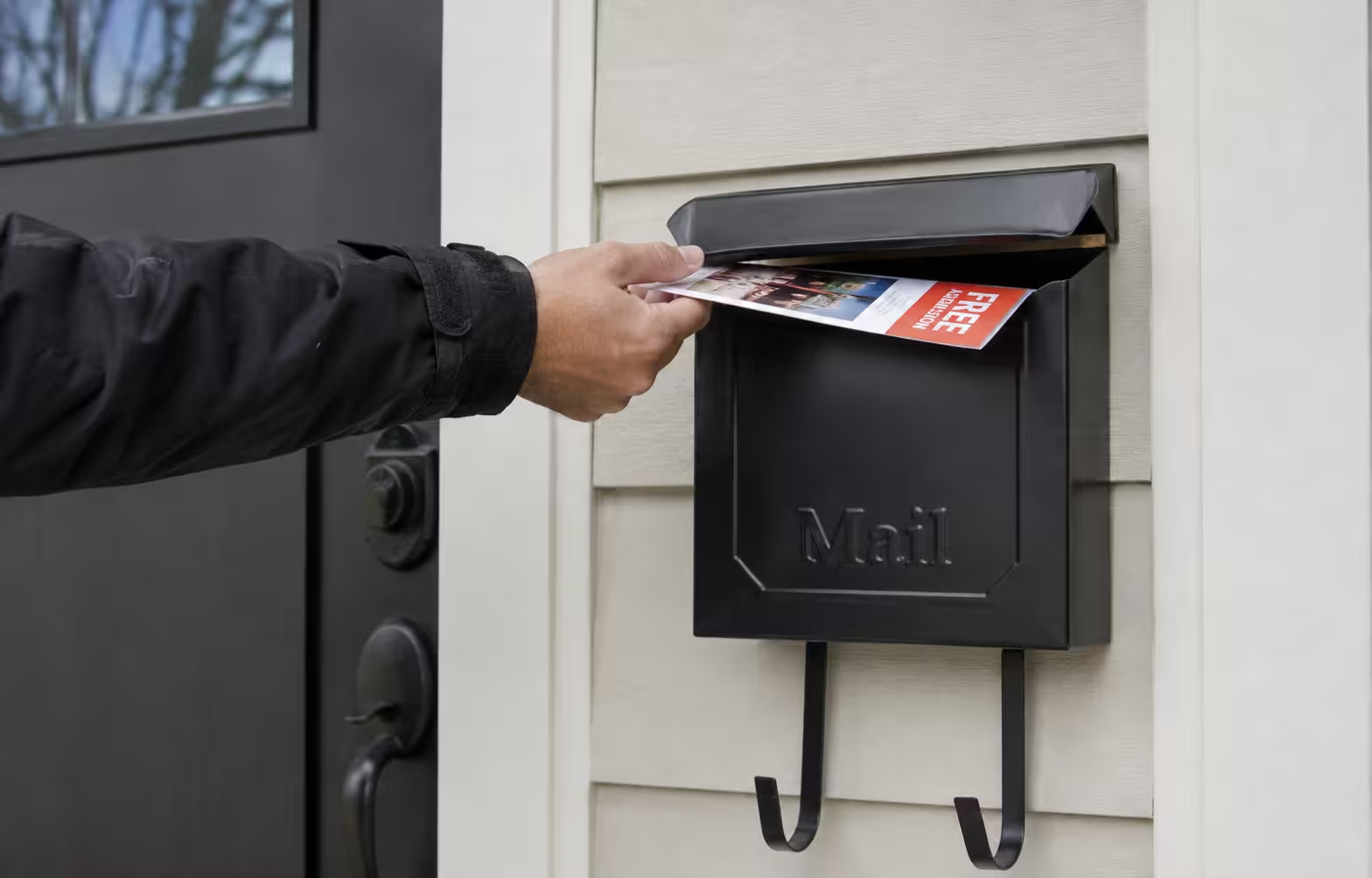
Door drop marketing is the strategic distribution of unaddressed, highly tactile promotional materials directly into the residential letterboxes of targeted geographic locations to drive tangible consumer action.
In an era dominated by transient digital impressions and saturated inbox feeds, physical home delivery offers an unmatched level of physical engagement. When executed with precision, it converts local households into loyal brand advocates, securing an unskippable presence on the kitchen tables of high-value prospects across the United Kingdom.
What is Door Drop Marketing?
Door drop marketing is an unaddressed direct-to-home channel that targets specific postcode sectors, residential streets, or demographic profiles without requiring personal customer data. Unlike personal addressed mail, this methodology focuses on spatial intelligence, leveraging location-based socio-economic profiles to place premium brand collateral straight into the hands of potential consumers.
High-end brands, luxury retailers, and prestigious local enterprises utilise door drop initiatives to establish an immediate, physical footprint within target catchments. Whether launching a Flagship boutique in London’s West End or deploying a luxury service across residential enclaves in Cheshire, unaddressed delivery bridges the gap between digital awareness and tangible physical action.
The Dynamics of Unaddressed Formats
To capture attention at the point of delivery, brands must select a physical medium that reflects their positioning while delivering information effectively.
- Bespoke Leaflets: Exceptional for sharp, immediate promotional statements, regional store invitations, and direct-response activations.
- High-Grammage Flyers: Compact, heavyweight physical cards designed to showcase single, elevated brand messages or exclusive invitations.
- Architectural Brochures: Multi-page, bound publications ideal for luxury residential developments, premium home improvements, and private client services.
- Brand Catalogues: Comprehensive, curated physical Showcases engineered to drive offline-to-online digital browsing and phone orders.
- Tactile Product Samples: Miniatures or sensory trials paired with printed collateral, allowing consumers to experience a product's physical benefits before purchasing.
By removing the reliance on third-party personal data, unaddressed campaigns streamline campaign launch timelines while avoiding complex privacy restrictions. Unaddressed drops provide an immediate, expansive reach across prime target markets without compromising GDPR protocols. To understand how physical outreach complements broader field initiatives, explore our guide on understanding demand generation versus field marketing synergies.
How to Build a Precision Strategy for Local Growth
A successful door drop marketing campaign relies on clear strategic objectives, robust audience profiling, and precise geographic routing. Random physical drops yield random returns; high-performing campaigns treat the letterbox as a premium touchpoint that demands sophisticated planning.
Setting Measurable Campaign Objectives
Defining precise, quantitative objectives before creative production is essential for evaluating return on investment.
- Establish Key Metrics: Frame specific conversion milestones such as acquiring 100 net-new private client consultations, driving 300 store visits, or generating £50,000 in local pipeline revenue.
- Implement Attribution Mechanisms: Assign exclusive vanity URLs, bespoke QR codes, custom phone numbers, or geo-specific promo codes to each postcode distribution run.
- Evaluate Unit Economics: Calculate response rates, cost-per-acquisition (CPA), and net campaign return on investment (ROI) using comprehensive accounting. Calculate cost per response by dividing total campaign expenditure by total measured responses.
Identifying High-Value Demographic Segments
Reaching the right consumers requires looking beyond basic postal boundaries to analyse the lifestyle traits and purchasing behaviours of local residents.
- Socio-Economic Mapping: Group target households by household income, property tenure, household structure, and affinity for luxury services.
- Locational Relevance: Target properties within realistic travel distances of physical retail hubs, pop-up locations, or service delivery zones.
- Messaging Alignment: Customise copy and creative formats to resonate with local consumer priorities, whether highlighting convenience for busy professionals or exclusivity for high-net-worth homeowners.
Mapping Distribution Routes and Postcodes
Efficient campaign delivery depends on precise route mapping that minimises overlap and maximises density across key geographic sectors.
- Define Primary Sectors: Isolate high-performing postal sectors (e.g., SW3, M3, B1) aligned with target demographic profiles.
- Calculate Distribution Units: Cross-reference property databases to build exact household counts while excluding non-residential properties or inaccessible locations.
- Establish Route Boundaries: Map clear physical boundaries using natural landmarks, major thoroughfares, and municipal edges to provide clear instructions for distribution teams.
- Incorporate Geo-Contextual Adjustments: Account for local architectural quirks, restricted access residential buildings, and rural housing density during logistical planning.
To scale local physical outreach into broader brand activations, review our insights on executing high-impact field marketing activities.
How to Design Printed Collateral That Converts
The physical format of a door drop item dictates how long it stays in the home and how effectively it drives action. Low-quality, thin collateral is quickly discarded, whereas heavy, tactile, expertly finished collateral demands attention and earns a place on the counter or desk.
Writing High-Converting Calls to Action
A compelling call to action guides the recipient toward an immediate, friction-free conversion path.
- Be Direct and Explicit: State the exact response path clearly, using actionable language such as "Reserve Your Private Viewing" or "Claim Your Exclusive Regional Allocation."
- Provide Immediate Value: Pair the response path with an attractive incentive, such as an exclusive local launch code or a complimentary upgrade.
- Reduce Conversion Friction: Offer multiple ways to respond, including direct smartphone QR code scanning, web addresses, and dedicated booking telephone numbers.
Selecting Premium Print Formats and Finishes
Physical materials communicate quality through weight, texture, and visual finish long before the reader processes the copy.
- Substrate Selection: Choose substantial paper weights (250gsm to 350gsm) to convey substance, quality, and premium positioning.
- Tactile Finishes: Apply soft-touch lamination, spot UV elements, or metallic foil blocking to create subtle sensory contrast.
- Format Selection: Match the structural design to the underlying message, using multi-panel folded layouts for detailed brand stories or sleek postcard formats for high-impact visual statements.
To learn how physical touchpoints tap into consumer behaviour to drive action, explore the psychology of experiential marketing.
How to Coordinate Seamless Campaign Logistics
Flawless distribution logistics are essential for ensuring physical collateral arrives in pristine condition at the right households on schedule.
Auditing Coverage and Delivery Reliability
Maintaining strict quality control over delivery channels protects brand integrity and guarantees maximum coverage across target areas.
- Verify GPS Tracking Capabilities: Partner with distribution networks that provide real-time GPS tracking logs, team route verification, and live supervisory oversight.
- Utilise Established Delivery Networks: Work with proven logistics networks, such as Royal Mail Door to Door, or deploy specialised, managed field teams for precise delivery.
- Establish Auditing Standards: Conduct live spot-checks and review post-campaign delivery logs to confirm full coverage across mapped routes.
Formulating Clear Briefs for Distribution Teams
Clear instructions prevent logistical errors and ensure distribution teams respect local guidelines.
- Set Clear Route Parameters: Supply mapped distribution sectors alongside precise delivery windows and clear property inclusion rules.
- Establish Quality Standards: Require careful letterbox insertion, ensuring materials are fully posted without damage or leaving edges exposed to weather.
- Respect Resident Preferences: Prohibit delivery to properties displaying visible opt-out signage or "No Unsolicited Mail" requests.
Executing large-scale field initiatives requires experienced operational support. Learn how our dedicated event solutions streamline complex deployments across the UK.
How to Ensure Environmental and Regulatory Compliance
Operating responsibly requires strict adherence to UK advertising standards, environmental regulations, and data privacy frameworks. A compliant campaign protects brand reputation while minimising environmental impact.
Navigating Permissions and Regulatory Frameworks
Understanding local regulations ensures smooth execution without legal complications.
- Distinguish Distribution Boundaries: Unaddressed delivery directly into residential letterboxes avoids commercial public-space flyposting rules, though compliance with local council guidelines remains essential.
- Adhere to ASA Guidelines: Ensure all pricing claims, product comparisons, and promotional offers comply with UK Advertising Codes governed by the Advertising Standards Authority.
- Respect Resident Privacy: Honour local resident opt-out registers, property notices, and privacy requests. Read our corporate privacy policy for details on our data handling and operational compliance standards.
Implementing Sustainable Print Practices
Eco-friendly production methods reduce environmental impact without sacrificing visual appeal.
- Source Sustainable Materials: Specify paper stocks certified by the Forest Stewardship Council (FSC) or Programme for the Endorsement of Forest Certification (PEFC).
- Use Eco-Friendly Inks: Utilise vegetable- or water-based inks that facilitate clean recycling processes.
- Optimise Print Runs: Use demographic data to calculate accurate print volumes, reducing excess stock and avoiding unnecessary waste.
To see how operational choices can support sustainability goals across campaigns, read our guide on 10 practical ways to reduce plastic waste during events.
How to Measure and Optimise Campaign ROI
Tracking campaign metrics transforms door drop distribution from a simple broadcast medium into an accountable engine for measurable business growth.
Tracking Multichannel Campaign Conversions
An effective attribution framework maps every incoming response directly back to its specific distribution source.
- Deploy Unique Digital Touchpoints: Assign dedicated landing pages, campaign-specific QR codes, or unique vanity domains to distinct postcode sectors.
- Use Geo-Specific Offer Identifiers: Issue unique checkout discount codes to compare performance across different regional locations.
- Track In-Store Conversions: Train retail staff to log physical promotional redemptions at checkout terminals during active campaigns.
Testing and Refining Future Drops
Continuous A/B testing reveals what resonates best with your target audience, providing key insights to optimise future campaign performance.
- Isolate Creative Variables: Test different headlines, calls to action, visual assets, or paper stocks against controlled distribution baselines.
- Optimise Geographic Selection: Reallocate budget from lower-performing sectors into high-converting postcodes based on initial response data.
- Refine Campaign Timing: Adjust delivery schedules around key seasonal periods, paydays, or regional event calendars to maximise audience engagement.
To build an effective tracking framework for your campaigns, review our guide on establishing smart field marketing KPIs.
The Power of Integrating Live Activations and Premium Staffing
Integrating physical door drops with live brand experiences creates an immersive campaign ecosystem that turns passive household impressions into active brand engagement.
When door drop campaigns coincide with local brand activations, pop-up events, or product sampling initiatives in major commercial centres like London or Manchester, response rates rise significantly. A well-timed physical drop serves as an exclusive personal invitation to a broader brand experience.
The human element remains critical to driving conversion during physical brand activations. Professional, articulate team members transform simple brand encounters into memorable customer relationships.
- Deploy Professional Staff: Utilise articulate, well-trained brand ambassadors who reflect your brand's standards and values.
- Deliver Immersive Sampling: Combine physical home deliveries with high-touch product sampling in nearby retail catchments.
- Build Omnichannel Connections: Leverage live interactions to capture customer opt-ins, collect feedback, and drive immediate digital engagement.
To discover how high-touch field marketing can accelerate local growth, explore The Ann Savva Group’s field marketing services.
FAQs about UK Door Drop Marketing
What is door drop marketing?
Door drop marketing is the targeted distribution of unaddressed printed promotional materials directly through residential letterboxes in specific geographic sectors. This strategy enables brands to reach local households based on socio-economic and demographic profiling without acquiring personal customer data.
How does a door drop campaign work?
A door drop campaign involves selecting target postcode sectors based on customer demographics, designing high-quality physical collateral, and distributing materials via audited delivery networks. Success is measured using dedicated tracking mechanisms such as QR codes, custom landing pages, or exclusive promotional offers.
Why is door drop marketing effective for local engagement?
Door drop marketing puts physical promotional materials directly into households, generating higher dwell time and repeat exposure compared to transient digital ads. It offers precise geographic targeting, making it an ideal choice for driving footfall to local retail locations or launching services within specific catchments.
What return on investment can brands expect from door drops?
Return on investment varies based on campaign targeting, collateral quality, and offer relevance, with response rates typically ranging between 1% and 3.5%. Combining physical door drops with digital tracking methods and live field activations helps maximise conversion and measurable pipeline value.
Do brands need council permission for door drop marketing in the UK?
Delivering unaddressed promotional materials directly into residential letterboxes generally does not require local council permits, unlike distributing flyers in public spaces under the Environmental Protection Act 1990. However, campaigns must comply with the UK Advertising Codes and respect residential properties displaying clear opt-out notices.
How can door drop performance be accurately tracked?
Door drop attribution relies on using unique response channels specific to each campaign or sector, such as geo-targeted discount codes, bespoke landing pages, custom QR codes, or dedicated telephone numbers. These mechanisms allow brands to track response rates, cost-per-acquisition, and overall ROI with precision.
Elevate Your Local Outreach Strategy
Door drop marketing remains one of the most effective ways to establish a memorable physical presence in target households across the United Kingdom. By combining data-driven geographic targeting, premium print collateral, and seamless logistical execution, brands can convert physical impressions into long-term commercial growth.
At The Ann Savva Group, we bring decades of expertise to designing and executing high-impact experiential activations, field campaigns, and promotional staffing strategies for premier brands.
Ready to create an unforgettable physical campaign? Contact The Ann Savva Group today to discuss your strategic objectives with our experienced production team.