Flyering in the UK for High-Impact Street Marketing Campaigns
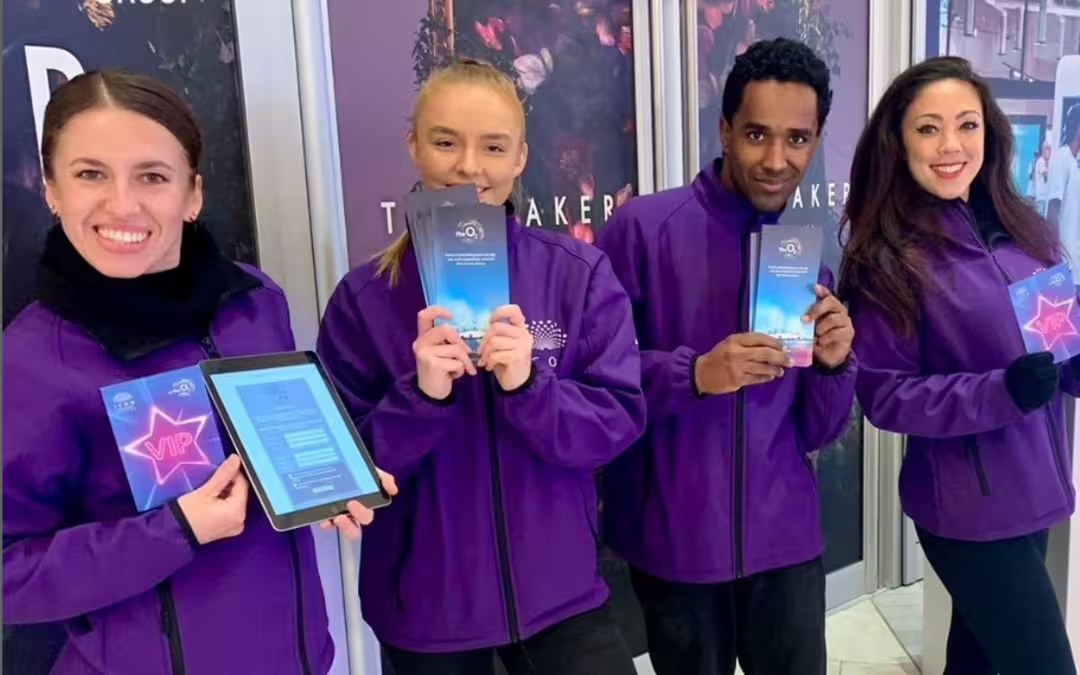
Flyering is the precise distribution of premium, tactile brand assets directly into the hands of a curated target demographic to inspire immediate digital conversion and measurable retail footfall. While digital advertising channels become increasingly crowded and easy to ignore, the physical touchpoint of an exquisitely produced flyer remains an incredibly potent mechanism for driving localised awareness.
For luxury brands, premium consumer services, and elite corporate entities, this traditional medium has undergone a sophisticated evolution. Today, it operates as a high-concept discipline within experiential marketing, combining precision spatial logistics with articulate, high-calibre promotional brand ambassadors.
Imagine the high-stakes launch of an artisanal fragrance house in Mayfair or a boutique financial advisory in the City of London. The pressure to command immediate authority is immense, and a single misstep in your public debut can relegate your brand to background noise. Sending untrained staff to passively hand out poorly formatted paper on a rainy afternoon does not merely fail to yield results, it actively diminishes your brand equity.
True experiential excellence demands a flawless synthesis of tactile luxury, military-grade logistical planning, and charismatic, highly trained brand ambassadors who embody your corporate ethos. By orchestrating your campaign through a premium agency like The Ann Savva Group, you transform a simple street-level activation into an immersive brand experience that captivates affluent audiences across the UK's most competitive commercial hubs.
What is Flyering in Premium Experiential Marketing?
Flyering in premium experiential marketing is the art of delivering an elevated, tactile brand asset to a precisely targeted individual through an immersive, face-to-face interaction that elevates brand perception. It is entirely distinct from mass-market leafleting, which relies on volume and indiscriminate distribution. Within the luxury sector, every handed asset acts as a physical extension of the brand's aesthetic. The weight of the paper stock, the typography, and the conversational eloquence of the brand ambassador all combine to create an unforgettable first impression.
When integrated into sophisticated event and experiential marketing strategies for memorable brand engagement, street-level literature distribution ceases to be a passive transactional event. Instead, it becomes a theatrical touchpoint. By elevating this asset into a highly curated brand experience, you bridge the gap between physical curiosity and digital conversion. The modern consumer craves authentic, tangible connection. Receiving a beautifully embossed invitation from an immaculate, articulate brand representative delivers exactly that, establishing an immediate emotional anchor that digital display ads simply cannot replicate.
How Do I Make My Flyering Campaign Successful?
To make your flyering campaign successful, you must establish an analytical framework that aligns precision audience profiling, clear commercial objectives, and strict adherence to regional regulatory compliance. A premier campaign cannot rely on chance; it must be engineered with the same rigor as a multi-million-pound television broadcast. Every variable must be controlled, monitored, and optimised for maximum impact.
How Do I Find My Target Audience?
Target audience identification requires mapping out the specific demographic, psychographic, and behavioral profiles of your ideal consumers to pinpoint exactly where they aggregate in high-value environments. You must look beyond standard age and income brackets. Instead, analyse their lifestyle preferences, daily commuting patterns, and preferred luxury spending sanctuaries. Create a comprehensive profile of your ideal recipient. Do they spend their mornings grabbing an artisan coffee in Chelsea, or are they stepping out of corporate offices in Manchester's Spinningfields at dusk? Your chosen distribution locations must map perfectly onto these high-end migration patterns.
For instance, promoting a bespoke wealth management platform requires positioning elite staffing assets near private members' clubs or premium business lounges, rather than high-traffic transport hubs where commuters are too rushed to engage. Design aesthetics must also speak directly to the sensibilities of this audience. Affluent consumers instinctively recoil from cluttered layouts or aggressive promotional discount shouting. They respond instead to minimalist sophistication, muted colour palettes, and tactile finishes like foil stamping or heavy letterpress stock. Before committing to a nationwide print run, it is wise to test subtle design variations with select focus groups. This ensures your visual language resonates flawlessly with your chosen demographic.
How Do I Set Goals for My Flyering Campaign?
Setting goals for your campaign requires defining specific, measurable, achievable, realistic, and time-bound (SMART) key performance indicators that tie directly to your overarching commercial strategy. You must explicitly declare what success looks like prior to deploying staff into the field. Are you looking for immediate footfall to a new flagship showroom in the West End, a surge in high-value digital inquiries, or long-term brand affinity surrounding a major product debut?
Write down your targets with absolute precision. For example, aim for a 3% conversion rate on an exclusive VIP invitation, or look to capture 500 high-net-worth email registrations within a specific fortnightly window. These exact metrics dictate your operational scale, detailing precisely how many assets must be printed and how many staffing hours are required across your target locations. Every design element on your literature must actively guide the recipient toward achieving these goals. If your objective is high-value digital acquisition, a beautifully integrated, tracked QR code or an exclusive, easily memorised vanity URL must take center stage. If your goal is direct boutique footfall, include a beautifully rendered, minimalist map of the local area alongside a compelling reason to visit immediately, such as a complimentary sensory tasting or a private viewing.
Do I Need Permission for Flyering?
Yes, you absolutely require official permission and explicit regulatory authorisation before launching any public or private street-marketing campaign within the United Kingdom. Operating without the necessary legal permits can lead to immediate campaign shutdown, substantial financial penalties from local councils, and severe damage to your brand reputation. Navigating the complex landscape of UK street licensing requires a seasoned approach. Local authorities across London, Birmingham, and Manchester maintain strict, distinct bylaws regarding the distribution of free printed material. Many high-footfall zones require a specific street trading or distribution licence, which must be applied for weeks in advance.
Furthermore, iconic luxury locations like Covent Garden, the absolute heart of the West End, or premium retail environments like the Trafford Centre are private land. Operating within them requires direct negotiation and commercial agreements with land management companies. Ethical considerations and environmental responsibility are also paramount to protecting your brand image. Ensure your ambassadors are trained to actively manage the distribution environment, instantly reclaiming any dropped literature within their designated radius. By presenting your materials responsibly, using sustainably sourced, premium recyclable substrates, and respecting the local architecture, you preserve the spotless reputation of your enterprise while demonstrating a modern commitment to corporate social responsibility.
How Can I Design a Flyer That Actually Works?
To design a flyer that actually works, you must seamlessly merge striking visual ergonomics with copy that compels immediate action, ensuring the entire physical asset acts as an intuitive narrative pathway for the recipient. The design cannot simply be attractive; it must be an engineered piece of communication that commands attention within the first micro-second of physical contact.
What Should My Flyer Look Like?
Your flyer must employ a flawless visual hierarchy that guides the human eye naturally from the high-impact headline down to the primary call to action. The layout must feel balanced, spacious, and deliberate. Use typographic scaling to establish immediate order, making it instantly clear which piece of information takes priority.
- The Primary Hook: This is the largest, most commanding typographic element, positioned in the upper third of the layout to capture instant interest.
- The Contextual Detail: This consists of medium-sized, elegant sans-serif or classic serif typography detailing the exclusive nature of the offer or event.
- The Call to Action: This is a visually isolated, high-contrast block or elegant typographic element that draws the eye directly to the next steps.
- The Corporate Identity: This features discretely placed yet perfectly visible brand iconography, typically anchored at the base or the elegant header of the card.
Maintaining absolute brand consistency is non-negotiable. The typography, colour codes, and stylistic choices must mirror your existing digital and physical touchpoints, reinforcing brand recall. Embrace the power of negative space. Cluttering every square millimetre with text or imagery looks chaotic and desperate. Allowing ample white space gives your key messages room to breathe, elevating the overall aesthetic to a premium tier.
How Do I Write Flyer Copy That Gets Results?
Your headline must communicate your core, high-value proposition in five to eight evocative words, eschewing cheap puns or ambiguous wordplay in favour of sophisticated clarity. The copy should instantly captivate an affluent consumer who is otherwise flooded with daily marketing noise. Focus your narrative entirely on the exclusive benefits and sensory experiences awaiting the consumer, rather than a dry list of product features. Instead of stating "New Boutique Now Open," craft a narrative around "Discover the Future of Bespoke Tailoring in Mayfair." Speak directly to the lifestyle elevation your brand delivers.
Your call to action must be dynamic, authoritative, and completely unambiguous. Avoid generic phrases like "Visit our website," replacing them with high-intent commands such as "Reserve your private viewing at [Website]" or "Claim your complimentary bespoke consultation." Use active verbs that evoke discovery, exclusivity, and prestige. Avoid industry jargon unless your target audience explicitly expects it, and read your copy aloud during production to spot any clunky or awkward phrases.
What Colours and Images Should I Use?
Limit your colour palette to three or four carefully curated shades that align perfectly with the psychological profile of your luxury tier. Too many competing colours fracture visual focus and undermine the premium nature of the piece. Select a dominant brand colour, one or two elegant supporting tones, and an ultra-crisp, high-contrast shade for maximum legibility. Colours trigger deep psychological associations. Deep navy blue conveys timeless security and trust; rich emerald green evokes sustainable luxury and growth; while a minimalist palette of stark monochrome black and white screams high-fashion authority.
Ensure every image utilised is a bespoke, ultra-high-resolution photograph or a masterfully rendered graphic asset. Blurry, generic stock imagery instantly shatters the illusion of luxury and signals a lack of care. A single, breathtaking, evocative image that tells a story is infinitely more powerful than a disjointed collage of smaller pictures. For text readability, dark text on a light background works best for detailed information, while light typography on dark premium backgrounds should be reserved for high-impact headlines.
How Should I Hand Out My Flyers?
To hand out your flyers effectively, you must deploy a highly coordinated distribution methodology that blends seamlessly into the urban environment, matching your operational strategy to the precise lifestyle habits of your target consumer. The way your literature is delivered speaks volumes about your brand; it must always feel like an exclusive invitation, never an intrusion.
Where Are the Busiest Spots for Flyer Distribution in the UK?
Hand-to-hand distribution must be executed within highly curated, affluent footfall zones where your ideal demographic naturally transitions between work, leisure, and luxury shopping. Position your field marketing assets in locations where consumers are moving at a leisurely pace, making them receptive to a premium human interaction.
- Premium Transport Terminals: The pristine exits of central commuter hubs, such as London St Pancras International, Canary Wharf, or Birmingham New Street, capturing high-earning business professionals.
- Luxury Retail Corridors: High-end shopping streets like Bond Street, King's Road, or Manchester's Exchange Square, where consumers are already in a purchasing mindset.
- Cultural and Festival Quarters: Surrounding major art fairs, premium literary festivals, or exclusive theatrical previews in the West End.
- Elite Academic Campuses: Prestigious university squares for brands looking to capture affluent, trend-setting youth demographics.
By executing campaigns in these prime spaces, your brand ambassadors can engage in meaningful dialogue, answer questions on the spot, and gauge real-time consumer reactions. This brings invaluable insight to your broader high-end field marketing services initiatives.
How Do I Do Door-to-Door Flyer Drops?
Door-to-door distribution within the luxury sector requires hyper-targeted mapping of specific, affluent residential enclaves, ensuring your premium literature is delivered directly into the properties of high-net-worth individuals. This approach demands absolute respect for property and local guidelines. Map out your distribution routes using advanced demographic mapping tools, isolating specific postal sectors known for high property valuations and substantial disposable income, such as Richmond, Wilmslow, or Edgbaston.
Train your delivery teams to handle every property with extreme care. They must respect all "No Junk Mail" indications and ensure that every item is posted entirely through the letterbox, leaving no edges exposed to the elements. Planning your timing is key. Executing drops during quiet, mid-week daytime hours ensures minimal disruption to residents while allowing your team to work efficiently. This residential approach places your brand asset directly onto the family table, where it can be reviewed calmly away from the busy high street.
Can I Leave Flyers in Other Businesses?
Leaving flyers in complementary commercial establishments is a sophisticated B2B2C strategy that allows you to tap into an existing pool of pre-qualified, high-value consumers. This method relies heavily on establishing mutually beneficial corporate relationships with premium local businesses. Consider partnering with businesses that naturally complement yours, such as an elite interior designer placing literature inside a luxury estate agency, a premium wellness clinic positioning assets in a high-end day spa, or an elite concierge service displaying invitations at boutique hotel reception desks.
Always secure explicit permission from the business owner or general manager via a formal partnership agreement. Offer to cross-promote their premium services in return, creating a collaborative local ecosystem. Regularly audit these luxury displays to ensure they remain impeccably arranged and fully stocked. A dusty, chaotic stack of leaflets on a beautiful marble counter devalues both your brand and your partner's environment.
Best Places and Times to Distribute Flyers in the UK
Maximising the geographic reach and structural impact of your campaign requires a deep, data-driven understanding of the United Kingdom's primary economic engines and high-society calendars. By aligning with major city hubs and cultural events, you ensure your brand ambassadors engage audiences at the absolute peak of their receptivity. Utilising expert luxury event management and elite production planning logistics allows you to map out these high-traffic locations with precision, turning a standard handout into an elite brand activation.
- London Hubs: Mayfair, Covent Garden, Canary Wharf, and South Kensington draw a premium audience of high-net-worth individuals, corporate executives, and luxury tourists.
- Manchester Hubs: Spinningfields, King Street, Deansgate, and the Trafford Centre capture affluent professionals and premium retail consumers.
- Birmingham Hubs: The Colmore Business District, the Mailbox, and Solihull offer direct access to corporate leaders and high-earning commuters.
- Edinburgh Hubs: George Street and the New Town districts allow brands to connect with discerning tourists and wealthy local residents.
When’s the Best Time to Hand Out Flyers?
Timing your campaign involves aligning your distribution schedule with seasonal purchasing shifts, high-society events, and the specific daily rhythms of your target audience. For premium lifestyle brands, launching sophisticated creative field marketing campaign ideas during the sun-drenched summer event season offers a brilliant opportunity to capture consumers when they are relaxed and enjoying outdoor festivities.
- Corporate Targets: Deploy teams in business hubs during morning and evening commuting windows to capture wealth management or corporate prospects.
- Retail and Lifestyle Targets: Focus heavily on weekend afternoons when affluent shoppers are leisurely exploring premium boutiques and high streets.
- Seasonal Alignments: Coordinate launches around major paydays or key societal dates, such as regional festivals, regattas, or open-air concours.
How to Measure If Your Flyer Campaign Is Working
To verify the commercial success of a high-end street marketing campaign, you must implement rigorous digital tracking mechanisms that calculate your exact return on investment with absolute analytical clarity. Experiential marketing is no longer an unmeasurable art; modern tracking tools turn physical handouts into precise data capture points.
How Do You Track Flyer Response Rates?
Tracking response rates requires assigning unique, traceable digital identifiers to different batches of physical literature, allowing you to isolate exactly which locations, teams, and designs yield the highest engagement.
- Location-Specific Promotional Codes: Print distinct codes like "MAYFAIR25" or "SPINNINGFIELDS25" to instantly identify which geographic zone delivers the highest digital transaction volume.
- Custom Dynamic QR Codes: Embed unique tracking parameters within the QR codes distributed by different staffing teams, allowing you to monitor real-time scanning analytics via your digital dashboard.
- Dedicated Custom Landing Pages: Direct recipients to elegant, hidden vanity URLs created solely for the campaign, ensuring all incoming traffic is accurately attributed to your street activation.
By closely monitoring these metrics alongside your total distribution volume, you can accurately calculate your precise conversion rates. While standard mass-market flyer distribution across the UK typically yields a response rate between 0.5% and 5%, a highly targeted, premium activation handled by elite brand ambassadors frequently achieves significantly higher conversion rates.
How to Figure Out ROI on Your Flyer Campaign
Calculating the precise return on investment requires a meticulous financial evaluation, balancing every single operational cost against the total lifetime value of the clients acquired through the activation. To work out your ROI, compare all campaign costs (including creative design, premium printing, distribution licensing, and professional staffing hours) to the total revenue your flyers directly bring in. Subtract your total spend from your sales, then divide by that spend and multiply by 100 to get your percentage.
Consider a premium campaign budget structured for an elite London activation. If your creative layout, heavyweight foil-stamped printing, elite brand ambassadors, and regional municipal licensing fees total an expenditure of £5,000, and this beautifully executed campaign secures five high-net-worth clients generating a total attributed revenue of £20,000, your calculation yields a phenomenal 300% ROI. This clear financial proof demonstrates that investing in premium creative production and top-tier promotional staffing delivers exceptional, measurable commercial value.
How to Make Your Flyer Campaign More Eco-Friendly
Embracing environmental sustainability is an absolute requirement for the modern luxury brand. Affluent consumers expect environmental responsibility as a standard component of a premium brand's identity. By choosing eco-friendly materials and smart distribution strategies, you protect the planet while enhancing your brand's reputation for forward-thinking leadership.
Which Flyer Materials Are the Most Sustainable?
Adopting sustainable materials means selecting premium, high-character substrates that deliver an exquisite tactile experience without leaving a lasting environmental footprint.
- FSC-Certified Recycled Cardstock: Utilising heavy, rich paper stocks composed entirely of post-consumer waste, certified by the Forest Stewardship Council to guarantee responsible forestry practices.
- Artisanal Seed Paper: An incredibly innovative option where the literature is printed on biodegradable paper embedded with wildflower or herb seeds, allowing the recipient to plant the card directly into soil after use.
- Natural Organic Vegetable Inks: Replacing traditional petroleum-based inks with rich, vibrant soy or vegetable-derived alternatives, which dramatically reduces chemical emissions during the printing process and simplifies future recycling.
Using these eco-friendly options ensures your campaign aligns perfectly with modern sustainability standards. It shows your target audience that your enterprise values both elegant craftsmanship and environmental care.
How Can You Cut Down on Flyer Waste?
Minimising material waste requires shifting your focus from high-volume distribution to highly curated, data-backed targeting. By printing fewer, more impactful assets and delivering them exclusively to pre-qualified prospects, you significantly lower production waste. Integrating sleek QR codes allows you to keep the physical asset beautifully clean and minimalist, moving detailed corporate brochures, event schedules, and long-form videos entirely online. Furthermore, training your brand ambassadors to engage only in high-intent conversations ensures that your luxury literature is placed solely with individuals who show a genuine interest in your brand.
How to Combine Flyers with Digital Marketing
To unlock the full potential of your street marketing campaign, you must connect your physical handouts with your online presence, creating a seamless, multi-channel journey that guides the consumer effortlessly from an initial street-level interaction to digital brand loyalty.
How Do QR Codes Boost Flyer Campaigns?
QR codes serve as the perfect bridge between physical and digital spaces, letting consumers instantly transition from a tactile card to an immersive online experience using their smartphones.
- Exclusive Digital Invitations: Directing prospects instantly to a beautifully designed, private portal where they can RSVP for upcoming product launches.
- Immersive Brand Video Content: Launching high-production lookbooks, behind-the-scenes brand stories, or dynamic product demonstrations that deepen their connection to your brand.
- Instant Location Mapping: Opening smartphone maps with a pre-loaded route directly to your nearest boutique or event space.
Ensure the destination page is fully optimised for mobile devices, featuring rapid load times and an elegant layout that maintains the premium feel of the physical flyer.
How to Link Flyers to Your Online Presence
To maximise the impact of your campaigns, you can coordinate your physical street presence with targeted, location-specific social media advertising. When an affluent consumer encounters your immaculate brand ambassadors on the streets of Mayfair, and later sees a beautifully styled advertisement on their social feed, it builds powerful brand recall. Always display your official digital handles and primary website clearly on your literature, using elegant, understated typography. Encourage recipients to share their physical invitations on social media by offering access to limited-edition products or exclusive private previews. This smart combination of print and digital elements helps your local street campaign spark wider online conversation.
Common Problems with Flyer Campaigns (And How to Fix Them)
Executing a flawless street campaign comes with unique operational challenges. To protect your investment, you need a proactive management strategy that anticipates potential issues and resolves them swiftly.
- Targeting the Wrong Demographic: Deploying staff without rigorous demographic research results in wasted resources and low engagement. To avoid this, use detailed mapping tools and footfall analytics to identify exactly when and where your ideal clients gather. Partnering with a premium agency provides the deep local insights needed to ensure your team is positioned in the most lucrative locations.
- Low Conversion and Response Rates: If consumers are accepting your literature but failing to take action, the issue usually stems from a cluttered design or a weak call to action. Review your layout to ensure the core benefit stands out clearly and the next step is unmistakable. Elevating the quality of your paper stock can also make a major difference, as a premium feel immediately increases the perceived value of your message.
- Poor Staffing Performance: The success of your campaign rests entirely on the shoulders of the team on the ground. Utilising unmotivated, untrained temporary staff can actively damage your brand image. The solution is simple: partner with a premier promotional staffing agency that provides articulate, meticulously trained brand ambassadors who embody high standards of grooming, brand knowledge, and proactive engagement.
- Unpredictable Weather Disruption: The British weather can challenge even the most carefully planned activations. Rain can quickly ruin premium paper stock, and sudden downpours can thin out high-street crowds. Always check regional forecasts ahead of time and equip your teams with elegant, brand-aligned umbrellas and weatherproof storage.
The Human Element: Why Elite Staffing is Everything
In the world of high-end experiential marketing, your promotional staff are not just distributing literature; they are acting as the living, breathing embodiment of your corporate identity. When executed at a premier tier, this public interaction must mirror the refined service of a five-star hotel concierge or a luxury creative director. The charisma, appearance, and eloquence of your ambassadors are what transform a simple handout into an exclusive invitation.
This is precisely where the true value of investing in professional brand ambassadors for live experiences becomes clear. A premier agency does not simply supply temporary workers; it curates an elite team of professional ambassadors who are thoroughly educated on your brand history, core values, and precise messaging points before stepping onto the high street. When you are planning major corporate debuts, choosing to vet temporary promotional staffing agencies effectively will help you identify partners who maintain strict standards for selection and training. The right team will naturally command attention, field questions from sophisticated clients with ease, and guide prospects toward your digital and physical spaces with absolute grace.
For large-scale, multi-city rollouts across the UK, implementing expert scalable operational strategies for temporary event staffing ensures your brand maintains a consistently exceptional presentation at every single touchpoint. From the West End of London to the heart of Manchester, every interaction will deliver the pristine, white-glove experience your discerning audience expects.
FAQs About Flyering in the UK
What does "flyering" actually mean in marketing?
Flyering is the strategic distribution of printed promotional literature directly to a targeted audience within specific geographic locations to drive immediate brand engagement and consumer action. Within professional marketing, it describes the entire structured process of campaign planning, demographic targeting, premium material design, and high-end field execution.
Is "flyering" a real word in UK English?
Yes, flyering is an accepted, widely utilised industry term within British corporate marketing, though it is frequently interchanged with "leafleting" or "leaflet distribution" within formal regulatory and licensing frameworks.
How can I hand out leaflets more effectively?
To distribute literature effectively, position your brand ambassadors in high-value footfall areas where consumers are moving at a relaxed pace, ensuring they are receptive to engagement. Ambassadors should maintain excellent posture, offer an authentic smile, make polite eye contact, and present the literature as an exclusive invitation rather than a mass handout.
What should I actually say when offering a leaflet?
Ambassadors should open with a brief, high-value statement that highlights an exclusive benefit, rather than a generic greeting. For instance, phrases like "Your exclusive invitation to our private Mayfair preview this weekend" immediately spark interest and establish value.
Are there legal rules for handing out flyers in the UK?
Yes, the distribution of free printed material in public spaces throughout England and Wales is strictly governed by local council licensing authorities under the Environmental Protection Act. You must secure official distribution permits before starting, and always obtain direct commercial permission from land management when operating on private property like shopping centres or transport terminals.
What are the most effective design elements for a leaflet advertisement?
The most successful designs feature a powerful, benefit-driven headline, a single high-resolution image, ample negative space, and an unmistakable call to action. For street campaigns, convenient dimensions like A5 or A6 are highly effective as they slip easily into a jacket or handbag, which keeps them from being discarded.
Elevate Your Street Marketing Strategy with The Ann Savva Group
In the modern marketing landscape, true luxury is defined by flawless execution, tactical sophistication, and authentic human connection. A beautifully planned street campaign has the unique power to cut through digital noise, capture the attention of affluent audiences, and drive substantial commercial growth across the UK’s most competitive hubs. Achieving this level of excellence requires moving past basic distribution methods and embracing an analytical, high-end approach. From securing strict municipal permits in London and Manchester to crafting exquisite layouts and deploying elite brand ambassadors, every single detail must be handled with absolute care.
Ready to transform your public marketing initiatives into an unforgettable brand experience? Begin your journey with the UK’s premier event production and elite staffing specialists. Explore our elite portfolio of successful campaigns on our luxury brand field marketing clients page, or reach out to us directly through our premium event staffing contact portal today to arrange your bespoke strategy consultation. Let’s design an extraordinary activation that sets your brand apart.