Experiential Events Agency London: How to Create Unforgettable Brand Experiences
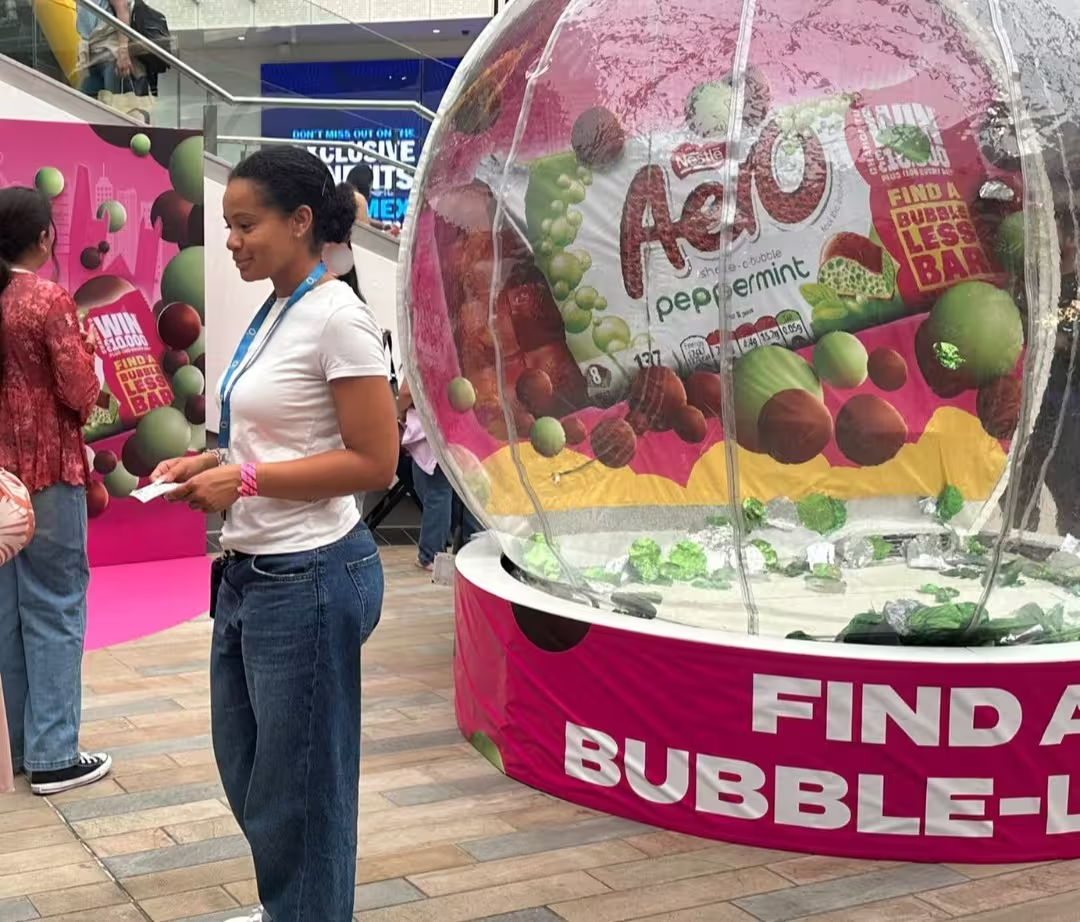
An experiential events agency London specialises in converting abstract brand positioning into high-impact, physical environments that drive deep emotional engagement, customer loyalty, and measurable commercial return.
Executing a flawless campaign in the UK capital demands absolute precision. From negotiating complex heritage venue permissions in the West End to managing high-footfall activations in Canary Wharf, the line between an extraordinary success and a logistical compromise is razor-thin. True experiential strategy transcends traditional event planning. It requires a masterclass in spatial design, sensory architecture, immersive narrative, and flawless operational choreography.
For luxury houses, global enterprise brands, and hyper-growth disruptors, live brand encounters are no longer optional line items in a marketing budget. They are the definitive engine for market differentiation. As live consumer expectations continue to evolve, partnering with a premier partner like The Ann Savva Group ensures that every touchpoint, from first conceptual render to final post-event data synthesis, is delivered with white-glove authority.
What is an Experiential Event?
An experiential event is a live marketing activation designed to immerse consumers directly in a brand's narrative through multi-sensory physical interaction, participatory storytelling, and spatial design.
Unlike traditional passive broadcasting, experiential activations invite audiences to become active co-creators of the brand journey. By merging architectural set design, strategic consumer movement, live performance, and physical touchpoints, brands move past traditional advertising to create lasting psychological impressions.
Immersive Storytelling: How Does It Work?
Immersive storytelling systematically engages human senses to construct a memorable, emotionally resonant reality around a brand core.
Rather than presenting information on a static screen or print collateral, an immersive environment guides guests through a curated sequence of spatial shifts, emotional beats, and physical discoveries. Leading London production teams architect these environments by layering tactile set materials, theatrical directional lighting, soundscapes, ambient scents, and live human performance.
When launching a luxury consumer product in central London, for instance, the guest journey must be orchestrated down to the second:
- The Threshold: A dramatic, sensory-neutral entry portal designed to shed the noise of the street and reset guest expectations.
- The Discovery Zone: Tactile, highly interactive display environments where visitors explore product heritage through guided micro-interactions.
- The Reveal: A high-impact spatial transformation utilising synchronised illumination, dynamic projection mapping, and audio visual staging to unveil the core innovation.
- The Sanctuary: An exclusive lounge area engineered for high-value dialogue, client hospitality, press interviews, and seamless lead acquisition.
Every spatial transition must embody the brand's core identity. Technical operational details, such as guest registration, coat checks, and queue management, must be smoothly integrated into the creative concept so that logistics serve as an extension of the luxury experience.
Accessibility must be baked directly into the conceptual architecture. Incorporating step-free movement paths, tactile orientation points, dedicated quiet spaces, and inclusive spatial layouts guarantees that your brand narrative reaches every attendee without barrier or friction.
How to Encourage Audience Participation
Audience participation converts passive spectators into enthusiastic brand advocates through structured, rewarding, and low-friction physical engagements.
Participation yields the highest return when the barrier to entry is low, but the emotional reward is high. Whether asking guests to formulate a custom fragrance, participate in a real-time digital art creation, or test high-performance machinery inside a controlled simulator, the dynamic must feel empowering rather than overwhelming. Elite promotional staff play a pivotal role here, welcoming guests, detailing interactions with warm authority, and maintaining continuous operational momentum.
Integrating digital layers, including spatial augmented reality, NFC-enabled wristbands, automated video capture booths, and real-time social display walls, can scale physical footprints into digital ecosystems. However, technology should serve the human experience, never obscure it. Analogue alternative pathways must always exist for discerning guests who prefer tactile connection over smartphone engagement.
To evaluate campaign efficiency, brands must monitor quantitative metrics throughout the activation footprint:
- Trial & Interaction Rates: The percentage of footfall actively engaging with primary interactive stations.
- Average Dwell Time: The length of time guests remain engaged within the activation environment.
- Direct Conversion Rates: Immediate sales, digital registration opt-ins, or direct lead capture totals generated on site.
How to Plan an Experiential Event in London
Planning an experiential event in London requires balancing creative ambition with precise spatial logistics, strict regulatory compliance, and venue parameters.
Executing live activations across the capital demands an intimate understanding of local infrastructure. Success relies on aligning early business objectives with strict budget allocations, robust production schedules, public health guidelines, and local authority licensing requirements across boroughs like Westminster, Kensington and Chelsea, and the City of London.
Setting Event Objectives That Actually Work
Setting event objectives requires establishing clear, quantifiable performance metrics linked directly to broader enterprise commercial goals.
Before committing to creative renders, enterprise leaders must define what constitutes campaign success. A high-impact product launch aimed at top-tier media and ultra-high-net-worth investors requires an intimate venue setting, bespoke security protocols, and curated one-on-one presentation suites. Conversely, an expansive public sector campaign aiming to drive broad trial relies on high volume, durable installations, and rapid participant turnaround.
Defining targets early provides clarity across every strategic production pillar:
- Define Target Cohorts: Determine demographic characteristics, behavioural profiles, and expectations for every guest segment.
- Establish SMART Targets: Set firm targets for total footfall, qualified lead generation, press pickups, and direct digital acquisition, ensuring alignment with SMART goals for event planning.
- Allocate Capital Strategically: Divide investment clear-headedly across venue hire, structural fabrication, technical AV, staffing, public permits, and dedicated contingency funds.
- Establish Measurement Systems: Deploy digital infrastructure, such as integrated badge scanners, custom URLs, and direct sales tech, well before going live.
Partnering with an established experiential events agency in London ensures that strategic parameters remain protected while creative concepts develop, avoiding costly mid-production adjustments.
Building a Strong Central Concept
A strong central concept serves as the creative backbone of an event, ensuring that every spatial design element, lighting cue, and human interaction supports the core brand message.
The creative narrative must resonate across every stage of the guest experience. From the visual presentation of the initial invite to the physical venue build, sensory atmospheric details, food and beverage design, and post-event touchpoints, every element must convey a single story.
Before approving build renders, agencies validate structural integrity, spatial flow, and guest experience maps through 3D spatial modelling, VR walkthroughs, and physical staging tests. This careful prototyping helps prevent structural issues during build-out, guaranteeing the concept scales cleanly whether staged in a historic West End gallery or an open outdoor square.
Designing the Experience and Running Production
Designing an experiential environment requires converting high-level creative vision into functional visual layouts, safe structural builds, and smooth live technical operations.
Set Design and Event Environments: What to Consider
The spatial design directly dictates how guests move through, perceive, and interact with the physical space. Designers balance aesthetics with practical operational needs, creating environments that reflect brand values while comfortably managing high-density crowds.
Key production considerations include:
- Spatial Traffic Flow: Designing intuitive pathways that guide footfall naturally, eliminating bottlenecks around popular interactive zones or entryways.
- Structural Fabrication Materials: Selecting high-grade, sustainable materials that offer tactile luxury while meeting strict local fire safety standards.
- Acoustic and Lighting Control: Building directional sound arrays and sculpted lighting plots to define spaces, capture attention, and ensure high-production video capture.
- Build Operations & Load-In: Planning build schedules around tight access windows, venue loading bay limits, freight lift capacities, and weight thresholds common in historic London properties.
Using Technology and Interactive Installations
Technology should enhance real-world environments by providing intuitive interaction, collecting data naturally, and amplifying the overall narrative. Deploying interactive LED backdrops, spatial audio systems, custom AR features, or automated camera setups demands real-world field testing under actual event conditions.
Technical setups must incorporate redundant infrastructure, such as dedicated local networks, backup power supplies, local offline data caching, and manual override systems to handle any connectivity issues seamlessly. On-site technical teams must be supported by expert host teams trained in interactive event execution ideas to keep guest interactions fluid, informative, and engaging.
How to Pick the Right Venue in London
Picking the right venue in London requires balancing aesthetic brand alignment with strict technical specifications, floor capacities, transport accessibility, and municipal permissions.
London offers a varied landscape of event spaces, ranging from sleek modern developments in Canary Wharf to historic listed buildings in the West End and open outdoor locations across the capital. Selecting the ideal space demands an in-depth review of operational details well beyond simple venue aesthetic appeal.
Choosing Spaces for Different Event Types
Matching spatial design to event intent is essential for proper guest comfort, narrative impact, and operational success.
- Bespoke Product Launches: Require raw, flexible spaces or modern galleries that allow complete structural customisation, high-grade AV installations, and tailored lighting setups.
- Corporate Thought Leadership Events: Demand venues featuring clear acoustics, dedicated breakout spaces, press rooms, reliable green-room facilities, and high-speed communications infrastructure. Reviewing an executive guide to choosing an event management company helps align venue selection with broader strategy.
- High-Impact Retail Pop-ups: Require prime ground-floor retail frontage with high natural footfall, clear street visibility, flexible lease terms, and robust internal power options.
- Outdoor Public Activations: Demand extensive logistics management, including weatherproofing, temporary generator power setups, portable water access, public safety barriers, and local council permits.
Agencies frequently review capacities by layout style, such as dinner, theatre, or fluid reception layouts, rather than relying solely on maximum standing statistics. This ensures the footprint accommodates registration desks, storage areas, media setups, and dedicated spaces for catering logistics.
Access, Capacity, and Logistics: What to Double-Check
A complete venue site survey must confirm the practical constraints of a space before sign-off to keep build timelines and budgets on track.
Key site survey verification points include:
- Transport Infrastructure: Proximity to Elizabeth Line, Underground, and National Rail networks to ensure smooth access for guests and project staff.
- Step-Free Accessibility: Dedicated access ramps, spacious elevators, and compliant facilities to accommodate every guest safely.
- Loading Bay Logistics: Dimensions, vehicle height restrictions, loading schedules, and local council parking permits across busy central areas.
- Structural and Power Audits: Ceiling height clearance, floor weight capacities, load-bearing anchor points, three-phase power availability, and back-of-house storage.
- Licensing Parameters: Local council noise restrictions, curfew rules, security requirements, and alcohol or street trading licences.
Popular Event Formats and How to Use Them
Selecting the appropriate event format allows brands to tailor physical environments, engagement mechanics, and narrative framing directly to their target audience.
Brand Activations: Getting People Involved
Brand activations convert public spaces or dedicated venues into immersive environments where consumers build direct personal connections with a brand.
A successful brand activation focuses on a clear, compelling call to action: encouraging product trials, capturing direct consumer data, or inspiring social sharing. Leading agencies design these footprints around a fluid guest journey, incorporating high-impact visual structures, intuitive engagement stations, and trained staff teams who guide guests smoothly through the space.
When executing high-footfall field marketing strategies, managing crowd movement, safety protocols, and queue structures is vital to maintaining a positive experience. Monitoring continuous metrics, such as direct sampling numbers, digital interaction counts, and brand recall lift, helps measure real-world performance beyond simple visual impressions.
Corporate Events and Gatherings in London
Corporate events bring together enterprise stakeholders, clients, and internal teams through structured environments focused on thought leadership, strategic networking, and executive positioning.
Modern corporate events skip passive presentations in favour of dynamic stage setups, interactive Q&A sessions, hands-on demonstration stations, and breakout discussions. Organizing seamless corporate events demands meticulous planning around central venue sourcing, transportation links, high-grade catering, and technical AV production, as outlined in our guide to corporate events management.
Hybrid event formats allow remote attendees to participate alongside on-site guests, requiring dedicated high-speed broadcast links, clear multi-camera production, and active digital moderation to keep both audiences equally engaged.
Product Launches
A product launch creates a high-impact debut that clearly communicates a new product's key features, market positioning, and unique value proposition.
Launching a luxury technology product, a premium automotive model, or a new beauty line requires tailored event environments. Tech activations demand high-capacity power systems, dedicated Wi-Fi setups, and dynamic display screens, while beauty and consumable launches focus on pristine sensory spaces, climate-controlled storage, and hygienic preparation areas.
Every detail of the launch journey, from the initial invitation to on-site registration, product reveals, media interviews, and post-event follow-up, must be choreographed down to the minute. Implementing smooth lead capture tools and transparent data consent frameworks guarantees that real-time engagements convert cleanly into ongoing sales opportunities.
The Human Element: Elite Premium Staffing
Elite promotional staffing converts high-level creative concepts into warm, personable, and compelling human interactions on the event floor.
Even the most extraordinary visual build will fail to resonate if the team representing your brand on site lacks training, energy, or refined communication skills. Front-line event teams serve as the direct human touchpoint for your brand. Investing in highly trained ambassadors transforms passive visitors into enthusiastic brand advocates.
Why Staffing Defines Experience Quality
Promotional teams set the emotional tone, maintain operational momentum, and embody your brand values throughout the live environment.
High-calibre event staff do far more than manage registration desks or hand out product samples. They act as knowledgeable, articulate brand representatives capable of answering complex product questions, managing high-volume queues calmly, welcoming VIP guests with poise, and keeping the space energetic.
Collaborating with a dedicated event staffing solution in London ensures your campaign is powered by thoroughly vetted professionals who understand the nuances of luxury event delivery. Discovering why staffing is the key to successful brand experiences underscores how human connection turns brief interactions into lasting brand loyalty.
Training, Uniforms, and On-Site Protocol
Thorough briefing, professional uniform standards, and clear management structures ensure on-site teams perform with consistent precision.
To maintain service quality across your activation:
- In-Depth Product Briefings: Educate staff on brand history, key product features, target audience profiles, and core message guidelines long before they step onto the floor.
- Uniform Design and Styling: Design bespoke uniforms that align with your overall spatial design, as detailed in our guide on the importance of event staff uniforms in London events.
- Proactive Queue Management: Train staff to identify potential bottlenecks early, engage waiting guests naturally, and keep overall event flow moving smoothly.
- Data Capture Precision: Equip staff to collect user data, survey feedback, and digital sign-ups accurately without creating friction for guests.
Working with premier partners who specialise in hiring an event hostess agency in London ensures your brand is consistently represented by skilled, polished professionals.
Managing Delivery On The Day
Managing delivery on the day requires clear operational leadership, continuous communication, real-time problem-solving, and active crowd oversight.
When doors open, theoretical planning gives way to live production execution. A successful live event relies on clear command structures, live schedule management, and proactive on-site team coordination to address unexpected challenges quickly and keep operations running smoothly.
Supplier Coordination
Effective supplier coordination hinges on maintaining a single master production schedule, defining precise team roles, and establishing clear real-time communications channels.
Leading production managers bring all suppliers, technical crews, venue managers, catering teams, and security personnel together for a comprehensive pre-event briefing. Providing clear running orders ensures everyone understands access windows, build schedules, technical testing times, changeover protocols, and pack-down procedures down to the minute.
Centralised communication, managed via dedicated radio channels or monitored operational groups, keeps updates clear, concise, and focused. If unexpected delays occur, the Lead Event Manager makes immediate decisions to keep the guest experience smooth and uninterrupted.
Guest Journey Management
Managing the live guest journey involves guiding visitors seamlessly from their initial arrival through registration, main activations, and final departure.
Clear visual signage, intuitive floor layouts, and attentive event hosts reduce confusion across busy areas. On-site managers monitor room capacities, queue lengths, and spatial movement continuously, adjusting staff placements or altering session timings before bottlenecks create discomfort.
Ensuring full accessibility, maintaining clear emergency exit routes, and providing proactive support for guests with additional needs guarantees an inclusive environment for all attendees.
Measuring Impact and Outcomes
Measuring experiential impact requires evaluating real-time engagement data, participant feedback, and commercial sales performance against initial business goals.
Demonstrating real return on investment (ROI) demands moving past simple guesswork. By pairing real-time physical metric tracking with post-event digital analysis, enterprise leaders can measure exact commercial returns generated by their experiential campaigns.
Engagement Metrics
Tracking engagement metrics provides clear visibility into how attendees interacted with physical environments, digital touchpoints, and brand ambassadors.
Key measurement pillars include:
- Total Audience Reach: Real-time footfall totals, unique visitors, visual interaction counts, and broader social media impressions generated by campaign hashtags.
- Depth of Interaction: Average dwell times, interactive content scan rates, product sampling totals, and participation counts across key touchpoints.
- Consumer Sentiment Lift: Immediate net promoter scores, pre- and post-activation brand perception surveys, and qualitative guest feedback.
- Direct Commercial Impact: High-value leads captured, direct sales completed on site, digital newsletter sign-ups, and calculated cost-per-lead performance.
By reviewing these metrics against baseline data and previous campaigns, brands gain actionable insights to refine future event strategies and optimise investment returns.
Post-Event Reporting
A comprehensive post-event report consolidates operational data, media metrics, and financial returns into actionable strategic insights.
A professional agency post-event report presents data clearly, evaluating performance against initial campaign goals. Using structured visual lists, performance points, and concise analysis, the report highlights strategic wins, key learnings, and clear next steps.
Organising follow-up meetings a few weeks after the event allows teams to evaluate longer-term impact, such as post-event lead conversions, extended media coverage, and sustained brand perception gains.
Choosing the Right Partner
Choosing the right agency partner requires assessing proven production capabilities, transparent fee structures, sector experience, and a strong operational track record in London.
Selecting the ideal agency determines the success of your live brand experience. Enterprise organisations require a partner capable of turning ambitious creative ideas into real-world activations safely, efficiently, and within approved budgets.
Evaluating Relevant Experience
Evaluating relevant experience involves reviewing an agency's portfolio of similar activations, production expertise, and past performance under complex venue parameters.
Key criteria to review during agency selection:
- Relevant Sector Portfolio: Case studies demonstrating high-end event delivery for brands within your specific market sector.
- London Logistics Expertise: Proven experience navigating local council permissions, noise regulations, heritage venue restrictions, and tight central access schedules.
- Core Production Capabilities: In-house expertise across spatial design, technical AV, fabrication, event management, and staffing logistics.
- Client References: Direct feedback from past brand directors detailing the agency's communication style, problem-solving, and budget control under live conditions.
Understanding Budgets and Scope
Understanding budgets and scope requires securing fully itemised proposals that clearly outline production costs, management fees, venue expenses, staffing rates, and contingency buffers.
Collaborating with a transparent agency ensures every investment line item is clearly defined from the start. Detailed proposals break down costs across creative direction, structural fabrication, technical AV rentals, venue hire, staffing schedules, licensing, insurance, transport, and contingency allowances.
Formal contracts should explicitly define scope boundaries, project milestones, approval workflows, cancellation terms, and intellectual property ownership. Setting clear financial terms and success metrics early creates a solid partnership built on trust, accountability, and outstanding live campaign execution.
FAQs on Experiential Events Agency London
What services does an experiential events agency provide?
An experiential events agency delivers end-to-end strategic, creative, operational, and staffing services designed to bring brand stories to life through physical activations. Core services encompass strategic planning, 3D spatial design, venue sourcing, heritage permissions management, custom build fabrication, technical AV production, elite promotional staffing, and comprehensive post-event ROI reporting.
Which are the best experiential marketing agencies in London?
The premier experiential marketing agencies in London are characterised by their creative innovation, operational rigour, high-end venue access, and dedicated staffing capabilities. Top-tier agencies possess a proven track record of handling London's unique logistical demands, such as strict borough permissions, complex loading bay restrictions, and high-footfall management, while consistently delivering quantifiable commercial return for global brands.
How do I choose an experiential events agency for my brand?
Selecting the right experiential agency requires evaluating candidate case studies against your specific sector requirements, campaign scale, and commercial targets. Schedule face-to-face chemistry meetings with the actual project production team, review their transparent budget frameworks, verify their local council and venue permissions network, and confirm their ability to supply elite, in-house promotional staffing.
How much does an experiential marketing campaign cost in London?
Experiential campaign costs in London vary significantly depending on spatial footprint, venue prestige, activation duration, structural complexity, and staffing volume. Hyper-targeted pop-up activations or localised sampling campaigns may range from tens of thousands of pounds, whereas large-scale, multi-site public installations or high-end luxury launches in central London frequently represent investments in the six-figure range.
Where can I find reviews of experiential events agencies in London?
Independent client reviews, verified case studies, and corporate ratings can be sourced through industry platforms such as Clutch, Sortlist, DesignRush, and Google Business Profiles. Additionally, requesting direct client references from shortlisted agencies provides firsthand context regarding their creative execution, operational transparency, live problem-solving, and financial stewardship.
What kinds of jobs can you get at experiential marketing agencies in the UK?
Experiential marketing agencies across the UK offer dynamic career paths spanning creative event production, spatial environment design, strategic account management, technical AV direction, and specialised event operations. Entry-level professionals typically begin their journeys in project coordinator roles, assistant producer positions, or on-site brand ambassador functions before advancing into senior creative direction and executive production management.
Orchestrate Your Next High-Impact Experience
Executing an extraordinary live brand activation requires absolute synergy between bold creative vision, rigorous technical production, and elite human connection. As the UK's leading authority in bespoke event production and premier promotional staffing, The Ann Savva Group transforms ambitious brand strategies into unforgettable physical encounters that captivate audiences and drive measurable business results.
Ready to elevate your brand presence? Contact our executive team today to schedule a consultation, or explore joining our elite team of brand ambassadors by visiting our careers portal.