Event Staffing Cost: A Strategic Budgeting Guide
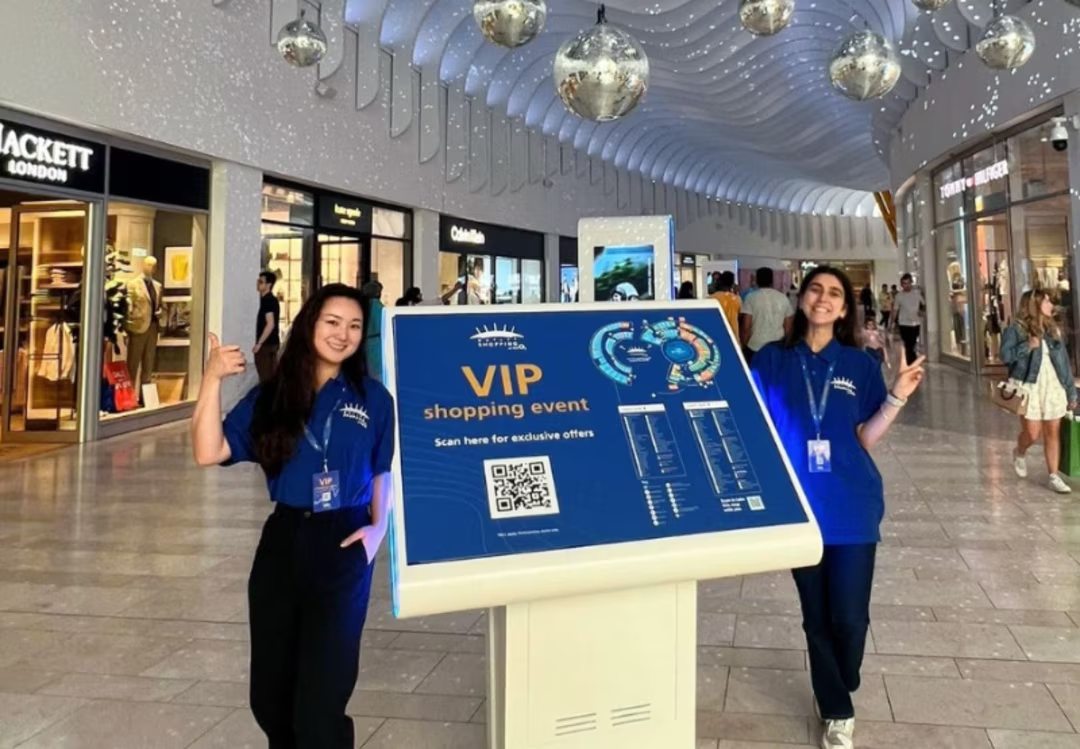
When planning a high impact campaign or corporate gathering, your event staffing cost will often command a major share of your overall budget. Securing a professional, reliable team requires transparent figures to protect your margins and avoid unexpected overruns.
In the UK, event staffing typically costs between £12 and £25+ per hour per staff member. This baseline is rooted directly in the UK National Living Wage statutory minimum, alongside voluntary benchmarks set by the Living Wage Foundation, which evaluates the real cost of living across the country. These baseline pay rates vary widely depending on the specific role, experience level, venue location, and event complexity.
Typical Budget Allocation: 40% to 70% of total event spend goes directly to labor.
To build an accurate financial forecast, you must understand what drives agency pricing, where hidden costs lie, and how to choose the right staffing model for your operational needs. There are several vital things to keep in mind before hiring event staff that can save you from costly scheduling and compliance errors down the line.
1. Key Pricing Drivers
Your overall event staffing cost is shaped by four core variables: what you need staff to do, how long they work, where the event takes place, and the scale of the guest list.
Role Type and Responsibilities
The specialisation required for a role directly dictates its premium. Entry level roles sit at the lower end of the pricing spectrum, while positions requiring certifications, technical skills, or specific presentation standards command higher rates.
- Brand Ambassadors: These roles command higher rates due to mandatory presentation standards, public engagement, and sales skills. To maximise your return on investment, it helps to understand the role of ambassadors in brand experience and how they drive consumer engagement.
- Security Personnel: Licensed under SIA regulations, these roles often require mandatory minimum shift lengths.
- Technical Crew (AV, Lighting, Staging): Highly skilled labour requiring equipment certifications and safety compliance.
- Team Leaders and Event Managers: Supervisory responsibility and on-site decision making automatically increase the baseline rate.
Match responsibilities precisely to skill level. Creating clear job briefs prevents you from paying for over qualified personnel when entry level staff would suffice.
Event Duration and Timing
Agencies rarely bill for the exact minutes worked. Most apply a minimum booking period, which is typically 4 to 5 hours per shift. This structural constraint ensures agencies can attract top tier talent who require guaranteed shift earnings to justify travel times. If a product launch only lasts 3 hours, you will still be billed for the 4 hour minimum.
Rate premiums also apply to specific time blocks:
- Nights and Weekends: Evenings, late nights, and weekend shifts frequently attract premium rates.
- Bank Holidays: Expect double time or time and a half multipliers.
- Pre Event Deliverables: Briefings, rehearsals, setup, and teardown hours must be factored into the final invoice.
Venue Location and Accessibility
Geographic wage data shows that major metropolitan hubs like London, Manchester, and Birmingham carry higher baseline hourly rates due to increased living costs and wage expectations. If you are specifically sourcing premium talent in the capital, partnering with a specialist event hostess agency London ensures you secure high calibre representatives tailored to luxury environments.
Accessibility also impacts logistics billing. Urban venues may incur congestion charges, parking fees, or early access permit costs. Conversely, remote or rural venues frequently require travel time pay, mileage reimbursements, or staff accommodation.
Guest Count and Scale
The size of your guest list dictates your headcounts. While a 50 person corporate reception can operate with a lean team, a 2,000 person exhibition requires structured layers of management.
For standard registration roles, planners usually allocate 1 staff member per 75 to 100 guests. Plated dinners require a much tighter ratio, often 1 waiting staff member per 10 to 15 guests, while bar operations usually require 1 bartender per 50 to 75 guests. Security ratios are determined independently based on venue licensing conditions and formal risk assessments.
2. Core Event Staffing Categories
Evaluating your workforce by functional category ensures you do not under staff critical safety positions or over spec front of house roles.
Front of House Personnel
Front of house staff include registration teams, ushers, ticketing assistants, hospitality hosts, waiting staff, and bartenders. They control crowd flow, credentials check in, and the immediate guest experience. These roles carry lower hourly rates but are required in the highest volume. Rates scale up if you require multilingual staff or high end VIP protocol experience.
Technical and Production Crew
This category encompasses sound engineers, lighting technicians, AV operators, stagehands, and riggers. They oversee structural setup, system operation, and breakdown. They command high hourly rates due to technical qualifications and safety certifications, and they often log significant overtime during post event teardowns.
Security and Safety Staff
Security personnel include SIA licensed door supervisors, crowd managers, stewards, and first aiders. They protect venue assets, manage risk exposure, and ensure local authority compliance. These are highly regulated roles with fixed minimum shift structures. Failing to meet venue mandated ratios can breach contracts and halt your event entirely.
Management and Supervisory Roles
Key positions include event directors, floor managers, team leaders, and accreditation supervisors. They manage shift schedules, coordinate suppliers, and handle real time crisis resolution. While they command premium rates, they represent a low headcount. Cutting management roles to save money often causes operational bottlenecks and costly miscommunications.
If managing these complex tiers feels overwhelming, it may be time to look into what an event planner does to see how an expert can streamline workforce coordination.
3. Comparing Staffing Models
Your choice of staffing model represents a direct trade off between administrative convenience and financial margin.
Agency Supplied Staff
While agencies command the highest hourly rates, their pricing structures are inclusive of recruitment, payroll taxes, insurance, and statutory compliance.
Hourly billing offers high flexibility for short events but scales up quickly with overtime. Flat rate packages provide cost certainty for specific, well defined activations. For brands running year round event calendars, retainer models are ideal because they lock in priority availability and predictable pricing.
Freelance vs. Contractual Staffing
Hiring independent freelancers lowers the upfront hourly rate but shifts the legal and operational burden entirely to your team. You must manage sourcing, onboarding, scheduling, and emergency replacements.
Freelance rates fluctuate during peak summer festival and trade show seasons. Fixed term PAYE contracts offer greater team stability for longer projects, but you must explicitly budget for employer costs, including National Insurance, pension auto enrolment, and holiday pay accrual.
In House Staffing Solutions
Building an internal events division offers the highest long term cost efficiency for venues, corporate brands, and exhibition organisers running frequent schedules. This model eliminates agency mark ups and ensures total control over brand standards. However, the fixed overhead remains constant, meaning payroll, training, and uniform costs must be absorbed even during quiet, low revenue quarters.
For corporations managing large scale annual calendars, reviewing the executive guide to choosing an event management company can help clarify whether outsourcing or building an in-house team yields a better long term financial return.
4. Cost Structures and Billing Nuances
To evaluate competitive quotes objectively, you must parse out base wages from agency margins and billable additions.
Hourly vs. Day Rates
Hourly rates include the base wage, employer burden, and the agency profit margin. Ensure you confirm whether shift breaks are paid or unpaid before signing. Day rates typically cover a structured 8 to 10 hour block. Always clarify how travel time impacts these hours and what rate triggers if the event overruns by even 15 minutes.
Flat Fees and Bundled Packages
This structure is common for full promotional deployments or registration teams. These packages typically cover recruitment, basic uniforms, and on site management. The main risk here involves hidden exclusions. Always check the fine print for what the package omits, such as late stage replacements, specialised tech gear, or extended hours.
Minimum Hours and Overtime Rules
Most contracts specify that overtime triggers after 8 consecutive hours or after a specific time of night, such as past 23:00. Overtime is standardly billed at 1.5x or 2x the base hourly rate. Delays during the setup or teardown phases are the leading cause of unexpected budget inflation, so your schedule must be tightly controlled.
5. Secondary Expenses to Budget For
The base labor rate rarely reflects the final invoice total. Account for these three ancillary categories to keep your forecast accurate:
- Travel and Accommodation: Budget for mileage claims, train or flight fares, venue parking, and overnight hotel blocks for multi day events. Early or late shifts may also require venue funded taxis for staff safety.
- Training and Briefing Costs: Mandatory pre-event briefings or brand inductions must be paid. If 20 staff members attend a mandatory 2 hour briefing session, you must add 40 hours of standard billable labor to your forecast.
- Uniforms and Specialised Equipment: Branded apparel, personal protective equipment (PPE), communication radios, and digital ticket scanners represent capital outlays that must be absorbed by the event budget.
6. Budget Estimation and Negotiation Strategies
Requesting Detailed Quotes
Never accept a single line total from a supplier. Insist on an itemised quote that breaks down standard hourly rates per distinct role, minimum shift thresholds, overtime multipliers with exact trigger points, and itemised travel or management fees.
Managing Contingency
Always embed a dedicated 5% to 15% staffing contingency buffer into your master budget. This reserve should be held strictly to cover verified operational changes, such as sudden surge attendance requiring extra security or venue installation delays triggering team overtime. Treat this contingency as a controlled reserve rather than spare cash.
7. Best Practices for Cost Optimisation
- Secure Early Bookings: Booking months in advance protects you from surge pricing, secures top tier supervisors, and mitigates the risk of paying rush administrative fees.
- Structure Your Negotiations: If you cannot move an agency on their base hourly rate, negotiate structural concessions. Ask for capped overtime rates, blended pricing across multiple roles, or waived uniform fees.
- Leverage Multi Event Partnerships: Commit to an agency by sharing your annual event calendar. Predictable volume allows agencies to extend discounted rates, dedicated account managers, and consistent personnel who already know your brand guidelines.
8. Legal and Compliance Framework (UK)
- Employment Status and Rights: Staff status determines legal rights. In the UK, you must ensure absolute compliance with the National Minimum Wage and holiday pay allocations.
- Agency Workers Regulations (AWR) 2010: Note that after 12 weeks in the same role, temporary agency workers legally qualify for equal pay and working conditions as permanent staff.
- Working Time Regulations 1998: This legislation monitors mandatory rest breaks, maximum weekly shift ceilings, and night work compliance.
- Liability Insurance: If hiring direct labour, UK law requires a minimum of £5 million in Employers’ Liability Insurance. If utilising an agency, secure written confirmation and certificates proving they hold equivalent Employers’ and Public Liability policies to protect your business from third party claims.
FAQs on Event Staffing Cost
How much do brand ambassadors cost per hour?
In the UK, the hourly rate for a brand ambassador generally ranges from £18 to £30+ per hour. The precise figure depends heavily on the location and the level of brand interaction required. For premium campaigns, defining excellence in London's experience economy requires highly skilled corporate representatives, meaning rates in the capital frequently trend toward the higher end of the spectrum to account for higher regional operational costs and competitive wage demands. You can read more about how these professionals elevate activations in our guide on what is a brand ambassador.
What do promotional models charge?
Promotional models typically charge between £25 and £45+ per hour, though they are frequently booked on flat day rates ranging from £200 to £400+ per day. Because these roles demand high presentation standards, specialised hospitality skills, and proactive crowd engagement, experiential marketing data confirms they command a premium over standard front of house event staff. Rates will increase if the role requires specialist skills, bilingual capabilities, or extended nighttime hours.
How much should I budget for event staffing?
Your staffing budget should scale relative to your guest headcount, event duration, and production complexity. Industry operational frameworks indicate that staffing typically consumes 40% to 70% of the operational event budget. For a standard 100 guest corporate evening reception requiring registration, basic hospitality, and security, you should budget between £1,500 and £3,500 for a reputable agency delivery. Larger exhibitions or technical productions will scale significantly higher.
Are there minimum booking hours for event staff?
Yes, the vast majority of event staffing agencies enforce a mandatory minimum booking period, which standardly sits at 4 to 6 hours per staff member per shift. This structure aligns with UK temporary labor market tendencies to ensure suppliers can attract reliable, high quality talent who require guaranteed shift earnings to justify travel times. If your actual event activation only lasts 2 hours, you will still be contractually obligated to pay for the full minimum threshold.
What is included in an event staffing agency's fee?
An event staffing agency's billable hourly rate is comprehensive. It covers the worker's core take home pay alongside mandatory statutory costs mandated under UK employment regulations, including employer National Insurance contributions, holiday pay accrual (typically 12.07%), and workplace pension allocations. Furthermore, the fee covers the agency's operational overheads, including recruitment vetting, right to work compliance checks, payroll administration, comprehensive public liability insurance, and standard agency profit margins.
Start Your Journey with The Ann Savva Group
The difference between a functional corporate event and a legendary brand experience lies in the mastery of human interaction. At The Ann Savva Group, we specialise in the extraordinary, providing the strategic vision, elite staffing, and professional talent required to elevate your brand to the global stage.
Your campaign deserves a public debut that matches its internal innovation. Let us handle the complexities of sourcing, training, and managing your on-site team while you focus on the vision of the future.
Contact us today to book your bespoke consultation and begin the journey toward your most impactful event yet. For those looking to join our world-class delivery team, we invite you to register with us here.